Bangladesh has completed the first Article 6.2-aligned carbon transaction in South Asia, marking an important milestone in the country’s efforts to use carbon markets to support its climate and development goals.
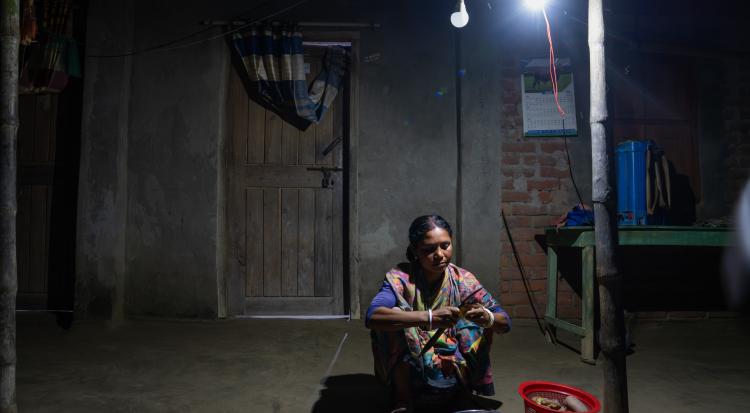
Through the World Bank-managed Carbon Initiative for Development (Ci-Dev), Bangladesh received US$15.3 million in results-based payments for verified emission reductions generated by 3.3 million solar home systems between 2021 and 2024. The systems have helped expand access to clean electricity in rural communities, with expected benefits for around 14 million people and support for approximately 58,000 jobs.
But the significance of the transaction goes beyond the Article 6 carbon payment itself.
Working with Ci-Dev, Bangladesh has established the national systems needed to generate and transfer high-integrity carbon credits under Article 6 of the Paris Agreement. This included operationalizing the country’s Standardized Crediting Framework—a country-owned mechanism for issuing emission reductions—and putting in place the authorization and institutional arrangements required for international carbon market transactions.
The experience provides a practical example of how results-based carbon finance can both reward verified climate action and build the infrastructure countries need to access future carbon markets.
It is also helping create a pathway for further clean-energy investment. Following carbon payments totaling US$15.3million, the Infrastructure Development Company Limited (IDCOL) is using carbon revenues to support green investments that can be difficult to finance commercially, including household rooftop solar for lower-income consumers and solar-powered irrigation pumps for rural farmers.
Building on this momentum, IDCOL is actively exploring how carbon finance can help unlock and accelerate implementation of its clean energy pipeline, which exceeds US$2 billion in planned investments. With support from the World Bank, IDCOL is assessing how carbon finance can be deployed at scale to mobilize investment across this pipeline, while developing the institutional capacity for a potential future role as a carbon aggregator.
“Receiving these carbon payments is validation of what millions of rural households already know — that clean energy works. But for us, the more important moment is what comes next. We are now in a position to use these revenues to reach consumers and projects that commercial finance alone would not provide. Carbon markets, when they function well, can do exactly this: turn climate results into investment capacity," said S. M. Monirul Islam, Acting Managing Director, IDCOL.
From millions of individual solar home systems to national carbon-market infrastructure —and now toward a billion-dollar investment pipeline, Bangladesh’s experience traces a coherent arc: leverage carbon finance to reward real results, use authorization frameworks to unlock payments, and channel those payments to open doors for scaled investment.
The journey from signing the Host Country Agreement to fully unlocked carbon payment to new investment opportunity is not incidental. It reflects a deliberate sequencing that other countries can study and adapt. Bangladesh has demonstrated that carbon markets, when built on strong country systems and high-integrity standards, can do more than compensate for past emissions reductions—they can become a springboard for the clean energy transitions ahead.