A rural electrification program in Uganda supported by the World Bank has become the first World Bank project to successfully transition from the Clean Development Mechanism (CDM) to the Paris Agreement Crediting Mechanism under Article 6.4.
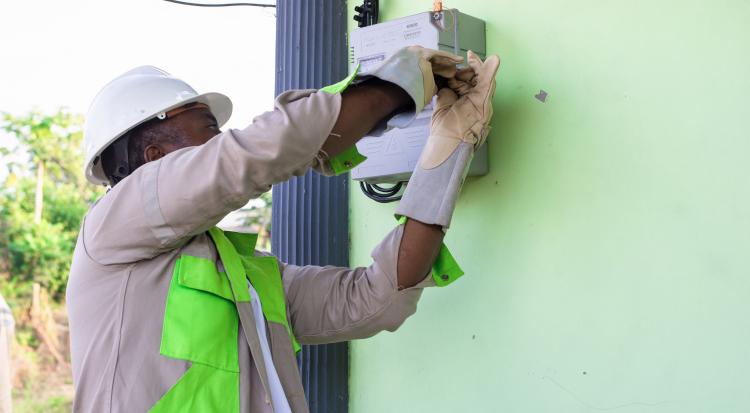
The program, Accelerating Electrification through Grid Extension and Off-Grid Electrification in Rural Areas of Uganda (PoA 10186), is implemented by Uganda’s Ministry of Energy and Mineral Development (MEMD). It generates carbon revenues by crediting emission reductions achieved under two World Bank investment operations in Uganda - the Energy for Rural Transformation III project (ERT 3, P133312), and the Electricity Access Scale-up Project (EASP, P166685). Carbon revenues are supporting the acceleration of last-mile access in underserved rural areas. Together, these projects aim to increase new grid connections and expand off-grid access, and have already enabled over 1.3 million households to access energy. With technical support from the World Bank, the program has now been formally registered under the Paris Agreement Crediting Mechanism (PACM).
Under an Emission Reductions Purchase Agreement (ERPA), the World Bank—acting as trustee of the Carbon Initiative for Development (Ci-Dev)—expects to purchase Article 6.4 Mitigation Contribution Units (MCUs) generated by the program between 2021 and 2025.
The transition marks an important milestone for international carbon markets. It makes the Uganda program the first government-managed CDM project worldwide to successfully transition to the Article 6.4 mechanism, demonstrating how existing carbon crediting activities can evolve under the framework established by the Paris Agreement.
“This transition shows how countries can build on existing programs to participate in the next generation of carbon markets,” said Olivier Mahul, Manager of the World Bank Group’s Carbon Finance Solutions Unit. “For Uganda, it opens opportunities to continue generating high-integrity credits while expanding access to electricity in rural communities, a core focus of the Mission 300.”
The transition also enables Uganda to continue using this national crediting program to supply high-integrity carbon credits to the market beyond 2025, supporting both energy access and climate goals.
The World Bank is currently supporting eight additional energy access projects in transitioning from the CDM to the Paris Agreement Crediting Mechanism. These efforts aim to help countries unlock long-term financing opportunities by monetizing verified emission reductions achieved through development programs.